 Practice the Family
Growing up
Six Summers: a parenting simulator
Make room for a childhood that grows its own dreams.
6–10 min
Inside the game
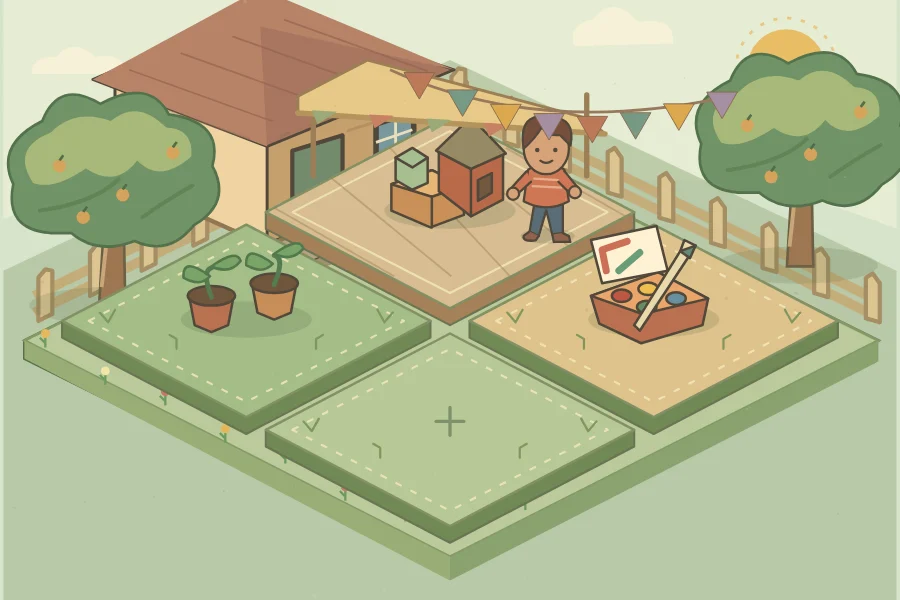
Six summers unfold in one backyard, from age five to ten. Set out blocks, paint, seed pots, notebooks, drums, and ribbons, each with a limited supply budget. Your child has a personality and their own plans: they may return to a favorite hobby, lose interest, or combine two activities into something you never intended. Watch the garden, their stature, and the project shelf change as time passes. The final neighborhood festival exhibits what they actually made, with a scrapbook of all six years.
How to play
Choose a material, then click or tap one of the four yard spots to place it. Moving a kit or putting it away costs an hour; buying a new kit also costs coins. Neighboring spots can inspire projects that combine the two materials. The porch stays dry in a drizzle, while the tree nook is cool on hot days. Select an occupied spot and invite the child to work with you for two hours, or leave an hour for self-directed play. Look inside the child’s sketchbook: every two summers they have a new idea. If they start it during those two summers and finish it, five stitches, by the festival, that page comes to life. Each weekend moves the calendar forward. The festival scores the sketches brought to life, the finished pieces and the afternoons you spent together, never the child.
A move to try
Try placing paint beside the wooden blocks, leaving two hours to join a build. The next weekend may be damp, so the paint might have to move under shelter. Watch the child’s current interest and keep another afternoon open to revisit an idea when the weather clears. Store unwanted kits instead of buying duplicates; they can come back out for no coins. Let your child choose their own pace, too—the finished festival is about the projects and memories, never a grade for the child.